Methods & AI
How can we study human judgment in ways that capture its complexity? My collaborators and I have developed and evaluated methods that connect lived experience with systematic measurement: from situated tasks and cross-cultural research to computational analysis of language. We have also aimed to provide interactive visualizations for some of these methods. Finally, we have also investigated how AI can support social science and what it would mean for artificial systems to reason wisely.
Judgment across situations, cultures, and technologies
Measuring thinking in context
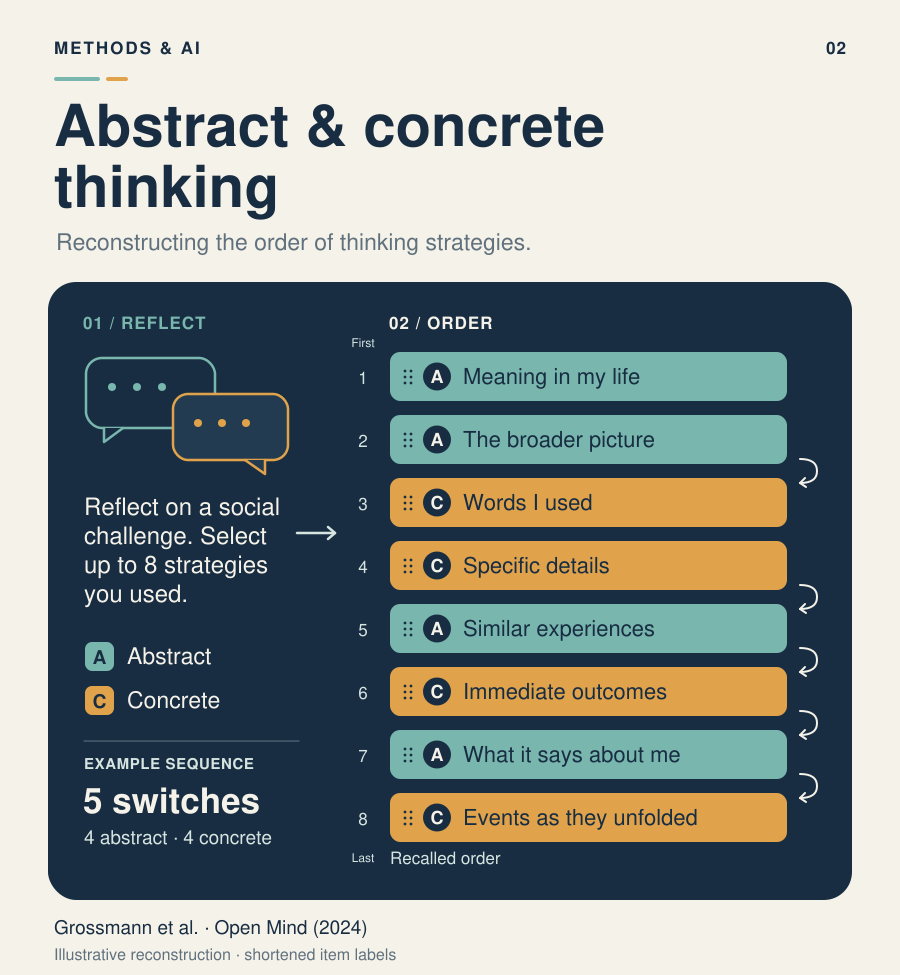
Our methods examine how people reason about particular experiences. These include the Situated Wise Reasoning Scale, an approach to intellectual humility grounded in recalled disagreements, and measures of abstract and concrete thinking. A strategy-ordering task asks people to reconstruct their sequence of thinking strategies, allowing us to examine how they alternate between abstract principles and concrete details.
Studying cognition across cultures
Research across societies requires attention to language, context, and task design. Our lab shares measures, validated translations, and visual tasks for studying wise reasoning, social orientation, and attention to context. The collection brings together instruments we have developed, adapted, or used, with credit to their original authors.
Computational methods and AI
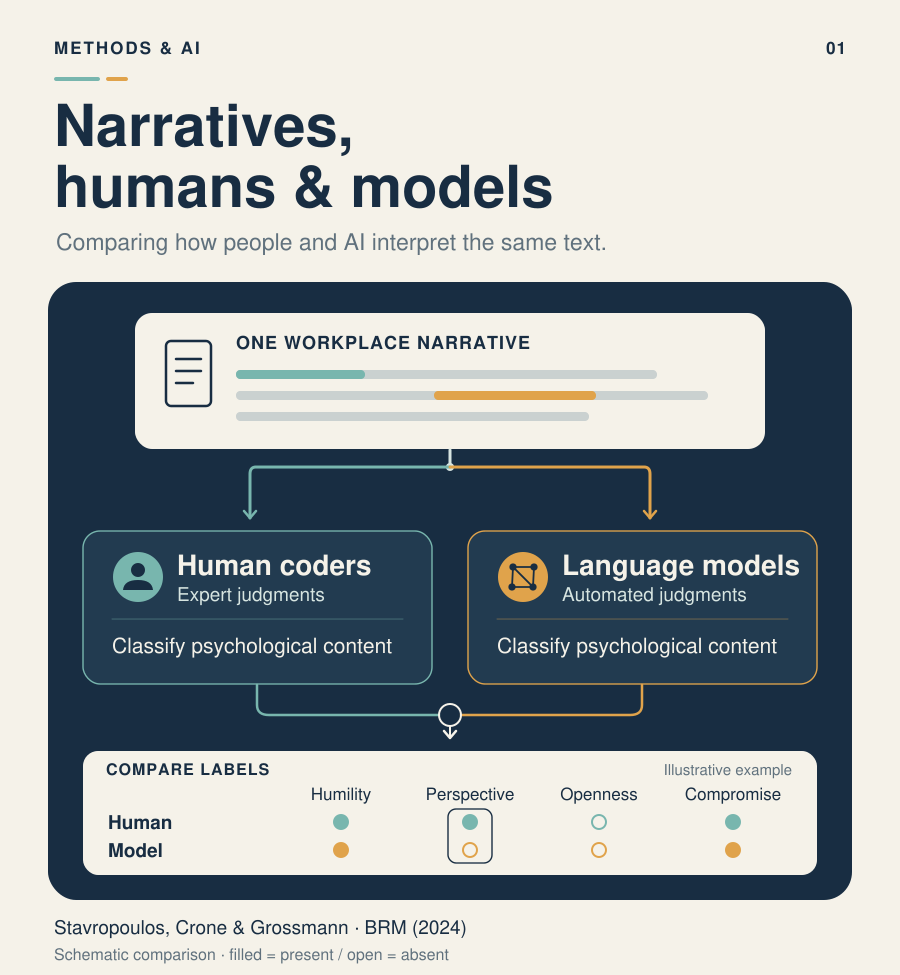
We evaluate how language models can help identify psychological processes in narrative accounts, comparing automated classifications with expert human coding. Our work also uses computational analyses of language to examine patterns in reasoning. Alongside these applications, we consider how AI may transform social science and propose approaches to evaluating and developing metacognition in artificial systems.
Multimedia research and open resources
World After COVID illustrates how video interviews, qualitative coding, and interactive visualizations can work together. Visitors can explore expert perspectives alongside the transcripts, coding framework, and analyses behind the project. We also share research materials and computational resources so that others can inspect, adapt, and extend these approaches.