
Wisdom
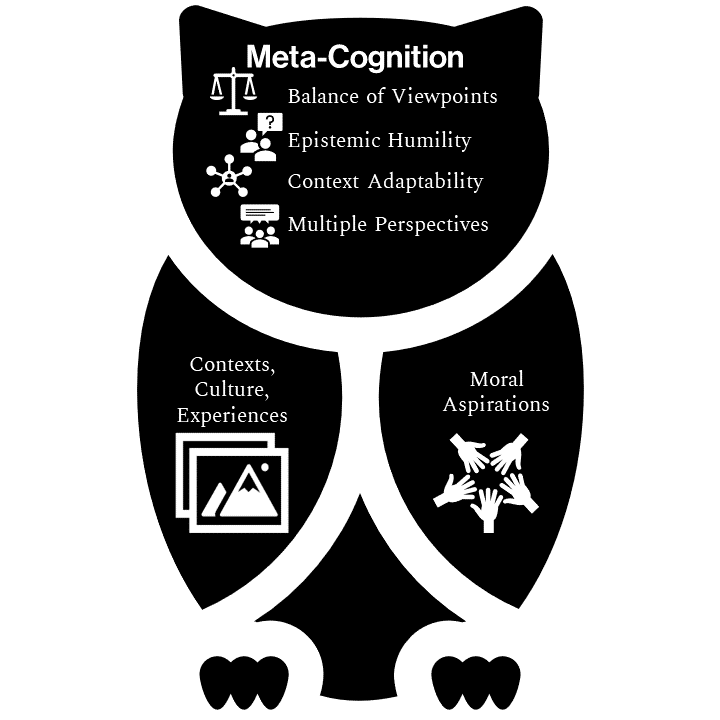
The quest to understand wisdom has sparked debate for centuries. Is it an innate trait or cultivated? Is wisdom chiefly individual or deeply social? To move beyond speculation, we must test these ideas empirically, blending experimental psychology, longitudinal research, and natural language processing. I advocate for a common model framework for a robust, accumulative science of wisdom.
My research focuses on sound judgment, particularly the concept of meta-judgment—the standards people use to navigate everyday decisions. I’ve explored how different cultures interpret rationality and reasonableness, contrasting economists’ views with those of philosophers and legal scholars. The key question: Do these cultural understandings align with established philosophical positions?
Judgment research has largely focused on errors and biases, mostly in Western samples. Less is known about how cultural and motivational contexts shape what people count as good judgment. To address this this gap, I founded the Wise Judgment Consortium—a global network of researchers across five continents that combines economic games, psychometric surveys, and computational text analysis to map how societies define and practice sound judgment.